What your cells gave up
The cells you're using to read this sentence are the same cells you had when you were two years old. The cells in your skin aren't. The skin you were touching a month ago is gone, what you're touching now is built from cells that didn't exist back then.
Different cells in the same body run on completely different clocks. Some last your entire life, some die in days. Every one of them started from the same DNA.
Why are the rules different?
Every cell is a specialist
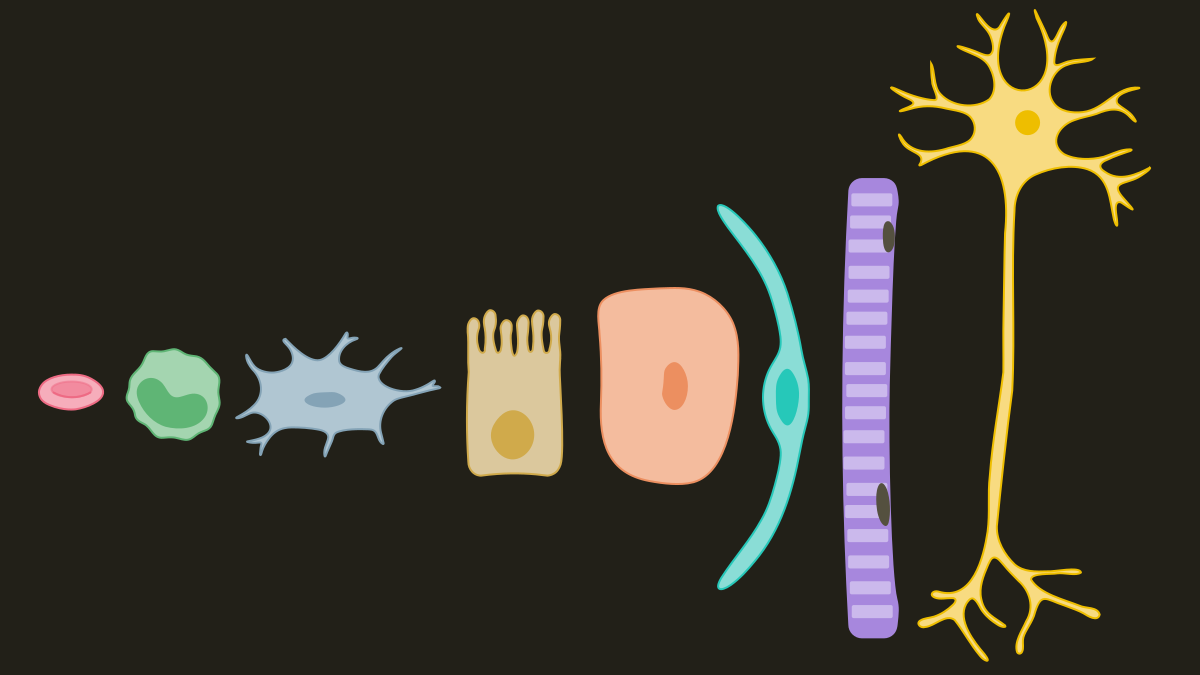
Your body uses more than two hundred different kinds of cells, and every single one of them is a specialist. Each one is good at exactly one thing, and bad at almost everything else. That sounds like a flaw in the design until you realize it's the entire design. Specialization is what lets a cell be exceptional at its job, and being exceptional always costs something.
So every cell type in your body is the result of a trade. Each one gave something up to be the best version of what it does. Once you start looking at the specific bargains they made, the whole architecture of how a body works comes into focus.
Red blood cells, the ones with no nucleus
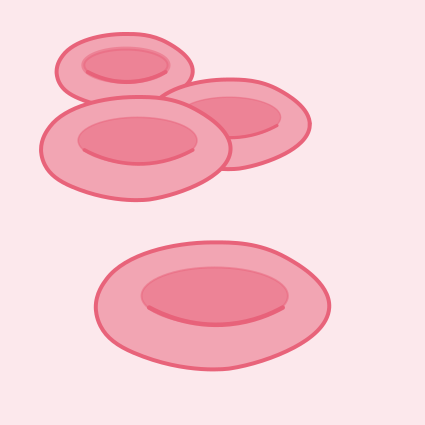
Red blood cells exist to carry oxygen, full stop. To do that, they had to shed almost everything. Most cells in your body have a nucleus full of DNA, mitochondria making energy, an endoplasmic reticulum folding proteins, all the standard internal architecture. Red blood cells gave up all of it. They have no nucleus, almost no organelles, and their interior is packed solid with the protein that grabs oxygen.
The cost is real. They cannot divide, they cannot repair themselves, they cannot fix a problem if something goes wrong. They live about four months and then they are broken down and replaced. To keep up, your bone marrow makes around two million new red blood cells every second. The price of being the best oxygen carrier in biology is being thoroughly disposable.
Neurons, the ones that won't divide
Neurons made the opposite bargain. The neurons you have right now, the ones storing your earliest memories, are largely the same ones you had as a small child. Most of them never divide again after early childhood. The brain you are using is, on a cell-by-cell level, very nearly the brain you've always had.
The trade is that neurons cannot replace themselves. If they're damaged, the body can't grow new ones to fill the gap, not really. That's why brain injuries are so much harder to recover from than skin injuries. A cell that lasts your whole life is a cell that doesn't have a backup.
Skin cells, the ones that don't last
Your skin cells went the opposite way. Their bargain was about replaceability. The cells stacked on the outside of your body, the ones you can feel right now, are dead. They're a tough waterproof shield made out of cells that finished their lives a few days earlier. Underneath, new cells are being made constantly and pushed upward to replace them. Your entire epidermis turns over every few weeks.
The cost is permanence. Skin cells aren't built to remember anything, store anything, or carry anything across time. They exist to be replaced.
Muscle cells, the ones that grow but don't multiply
Muscle cells made yet another deal. They cannot divide. The muscle cells you have were mostly there at birth, and you have not made many new ones since. What you can do is make the existing ones bigger. When you exercise, you're not growing new cells, you're forcing the cells already there to thicken. That's why building muscle takes patience, and why every gym goal is a long conversation with cells you've had your whole life.
A coalition of specialists
This is what your body is - not one organism doing everything, but trillions of cells, each one good at exactly one thing because being good at that one thing required them to give up everything else. They cooperate so closely you experience them as one person.
Every job your body does is delegated to a cell type that paid a price to be good at it. Your blood, your thinking, your immune system, the lining of your gut. The body is a federation, and every member made a different bargain.
We do this too
This same trade-off shows up in our own lives. Anything we get really good at, we have to give up other things. The pianist's hands aren't the surgeon's hands, the marathon runner's body isn't the dancer's body, the novelist's mornings aren't the mornings of someone with a newborn. Specialization is the deal we all make, with our cells and with our lives. You cannot be the best version of everything at once. The price of being exceptional at one thing is never being exceptional at the others.
It's a strange comfort, that the principle scaling all the way down through your blood and your skin and your bones is the same principle that shapes how you spend your days.
The eight cards in Pack 2 are eight specialists, each one in the middle of its own bargain. When you hold them up for your baby, you're showing them what they're already made of.