What's actually in our food?
A friend and I were comparing notes the other day on what to say to our toddlers about food. That morning my daughter had asked for ice cream for breakfast, and I had hesitated.
We both wanted to avoid the same things - we didn't want sweets to become "treats" that get demonized and craved more. We didn't want to say things like "chocolate makes you fat" or "broccoli is healthy", loading food with moral weight.
What do you say instead? We had the same answer, more or less: don't categorize food, but teach what's actually inside it.
What's actually in our food?
Four building blocks
Almost everything we eat is some mix of four kinds of building blocks: carbohydrates for quick energy, fats to store it, proteins to build with, and fiber to keep the gut working.
A piece of broccoli, a piece of chocolate, a slice of bread, a chicken thigh - they are all made of these four things in different proportions. Broccoli is mostly fiber, chocolate is mostly sugar and fat, bread is mostly starch, and chicken is mostly protein.
Once you eat any of them, your body takes it apart and uses the pieces.
Carbohydrates: the fuel
Carbohydrates are the body's fuel of choice. Every cell can burn them for energy, and especially the brain loves them, though even the brain can switch to alternatives if it has to. Red blood cells can use nothing else, they run on glucose alone. When you run, when you think, when you grow - you're burning carbs.
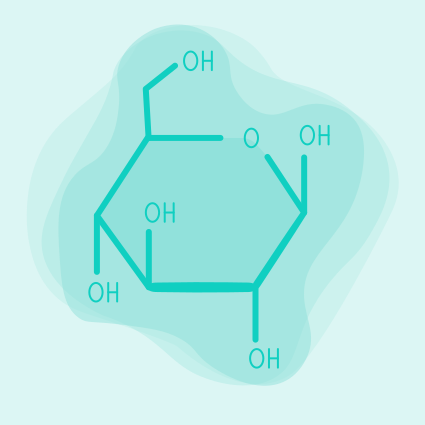
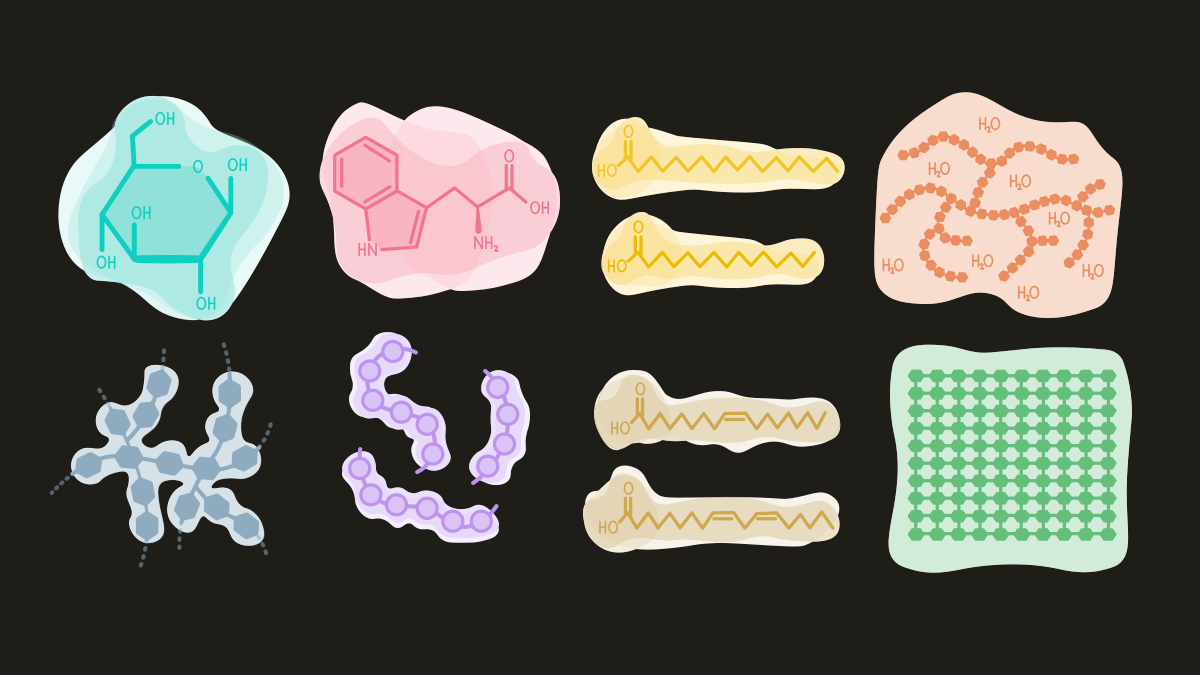
The two carb cards in Pack 8 are glucose and starch.
Glucose is the simplest sugar, the form the body actually uses. Any kind of carb gets broken down to glucose before it can be burned.
Starch is the storage form. Plants make starch by linking lots of glucose into long chains - the chains in a potato, in bread, in rice. When you eat them, your body cuts the chains back into glucose.
So the sugar in chocolate and the starch in bread end up the same way: as glucose in the blood. The difference is how fast it gets there - the sugar in chocolate gets there quickly, the starch in bread takes longer to break down. But once digested, it's the same molecule.
Fats: storage and structure
Fats do two jobs. They store energy for later, more than carbs can per gram. And they build a lot of the structures in the body, especially cell membranes and the sheaths around the nerves. The brain is about 60 percent fat by dry weight.
The two fat cards in Pack 8 are saturated and unsaturated fatty acids.
Saturated fats have molecules that pack tightly together. That's why butter is solid at room temperature, and why animal fats tend to be solid.
Unsaturated fats have a kink in the molecule that stops them from packing tight. That's why olive oil and avocado oil are liquid. Some unsaturated fats are essential, meaning the body can't make them on its own and has to get them from food.
The body uses both, and needs a mix.
Proteins: the builders
Almost everything in the body that needs to be built or rebuilt is made of protein - muscle, hair, skin, fingernails, enzymes, antibodies, the hemoglobin in the blood that carries oxygen.
The two protein cards in Pack 8 are amino acid and short protein.
Amino acids are the building blocks. There are 20 standard ones, and the body uses them in different combinations to build every protein it needs.
Short proteins are small chains of amino acids. Bigger chains, thousands of amino acids long, become the proteins that build, repair, and protect the body.
When you eat a piece of chicken or a spoonful of beans, your body breaks the proteins all the way down into individual amino acids. Then it puts them back together in whatever order it needs.
Once digested, the body can't tell where the amino acids came from. The amino acids from chicken, from beans, from cheese, they all go into the same pool, and the body builds from there.
Fiber: what doesn't get digested
Fiber is the only one of the four building blocks that the body doesn't actually digest. It passes through, but it does two important things on the way.
The two fiber cards in Pack 8 are soluble and insoluble.
Soluble fiber soaks up water and turns into a soft gel. It keeps you full longer, and it feeds the trillions of bacteria living in the gut. The bacteria break the fiber down and produce molecules your body can use in return, called short-chain fatty acids.
Insoluble fiber stays firm and doesn't soak up water. It bulks up what passes through the gut and helps you poop.
What it becomes
Once food is in the blood, it has been broken down into the building blocks. The body doesn't keep track of where each piece came from. The amino acids from dinner mix with the amino acids from yesterday's lunch, mix with the amino acids that have been in storage. Same with the sugars, same with the fatty acids. The body draws from a shared pool.
This is why there's no good food or bad food at the molecular level. Food is a delivery system for the building blocks the body uses to build itself. Different foods deliver different mixes.
What matters is getting enough of each. A body that gets only sugar will burn fast and crash. Without enough protein, it can't build muscle. Without fiber, things get constipated. None of these are about good or bad foods, they're about balance.
How to talk about it
This is what I tell my daughter when she asks about food. Not "this is good for you" or "this is a treat." I tell her what's in it.
When she has chocolate, I say "this is mostly sugar and a little fat. It gives you energy fast."
When she has broccoli, I say "this has lots of fiber and some vitamins. The fiber feeds the friendly bacteria in your gut."
When she has chicken, I say "this is mostly protein. Your body breaks it apart and uses the pieces to build new muscle and hair."
The point isn't that she remembers any of it. The point is that food doesn't come with a moral story attached. Chocolate isn't a treat, broccoli isn't a chore, they're just food made of different building blocks.
When she asks for ice cream for breakfast, the conversation isn't "no, sugar is bad" or "only after dinner." It's about what's in it, and what else her body needs that day.
Eight stills
The eight cards in Pack 8 are the four kinds of building blocks, each shown twice. Glucose and starch. Saturated and unsaturated fatty acid. Amino acid and short protein. Soluble and insoluble fiber.
Each card is one piece of what's actually in the food on your child's plate.
What it builds
Every cell in your child's body was built from molecules that came in through their mouth. Their bones, their muscles, their skin, the wiring of their brain, all of it. The body builds itself from what it gets.
When your child asks why we eat the things we do, you can tell them: because your body needs to build itself, and food is what we build it from.
Pack 8, Inside Your Food, is Lupe's first collaboration pack, made with Dr Liz Berry, a biochemist.