Packs Activities Blog About Newsletter
Pack 8 · Inside Your Food

Inside Your Food

What your food is made of, down at the level of molecules. Four kinds of building blocks - carbs, fats, proteins, and fiber - two examples of each.

Lupe's first collaboration pack, made with Dr Liz Berry, a biochemist.

Free
Start here
Parent's cheat sheet

A 1-page guide to the molecules in your food and the foods they come from, so you can talk about what your child is eating.

What's inside

0–6 months
High-contrast cards

8 black-and-white cards for the earliest months.

18 months+
Matching game

8 pairs of color cards, one for each molecule.

Ages 1+
Coloring sheets

8 full-page molecules to color in.

Ages 3+
Molecule-to-food matching

Match each molecule to the food it comes from, from banana to broccoli. A trickier pairing game for older kids.

Print specs
  • Prints from any home printer at A4 portrait, 100% scale
  • Card stock or lamination makes them last
License

Free for personal, classroom, and childcare use. Please don't resell, redistribute, or re-host these files, and please keep the Lupe credit on them. To share, link people to lupe.science rather than uploading the PDF elsewhere. Full terms & licensing.

What food is made of

Four kinds of building blocks in everything you eat.

Carbs for quick energy, fats to store it, proteins to build with, and fiber to keep your gut happy.

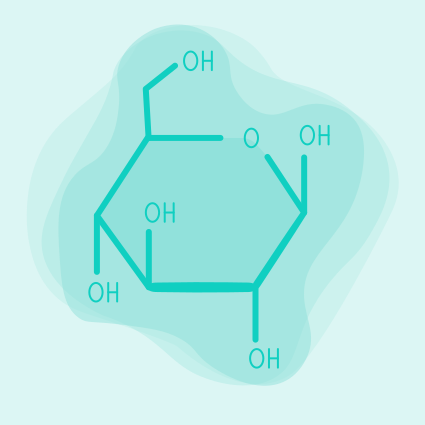
Glucose

Glucose is a small piece of sugar, and your body's favorite fuel. Your cells burn it for the energy to run, think, and grow.

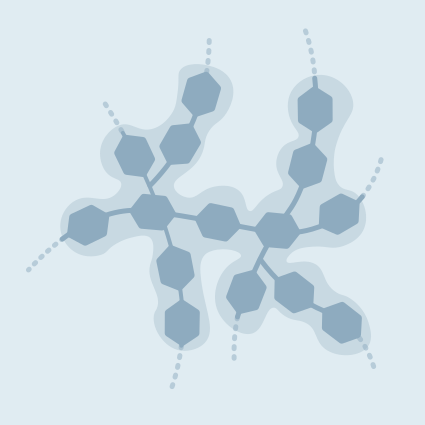
Starch

Starch is lots of glucose joined into one long chain. Your body breaks it back down into sugar for energy.

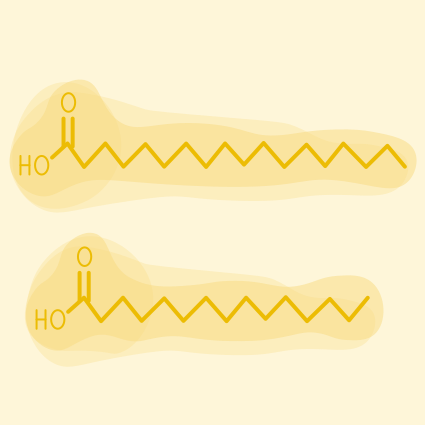
Saturated fatty acid

Fat is how your body stores energy for later. Saturated fats pack tightly together, which is why butter is solid at room temperature.

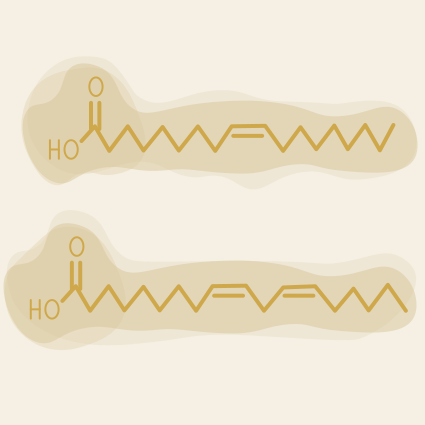
Unsaturated fatty acid

Some fats stay liquid because their molecules have a kink in the middle. Olive oil and avocado oil are full of them, and your brain needs some of these fats to work well.

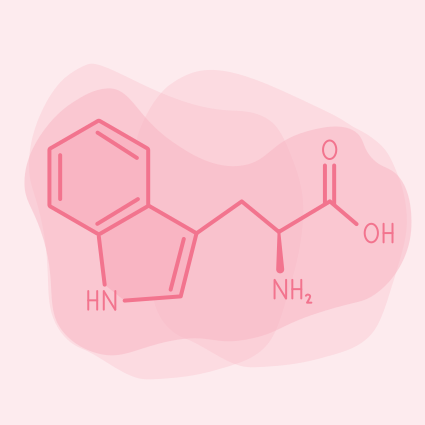
Amino acid

An amino acid is one building block of protein. Your body links lots of them together to make muscles, hair, and so much more.

Short protein

A short protein is a small chain of amino acids. Bigger chains become the proteins that build, repair, and protect you.

Soluble fiber

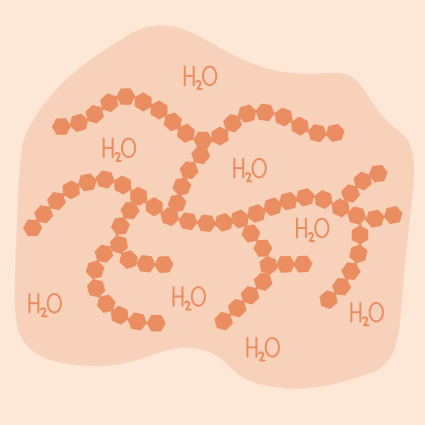
Soluble fiber soaks up water and turns soft inside you. It keeps you full and feeds the friendly bacteria in your gut.

Insoluble fiber

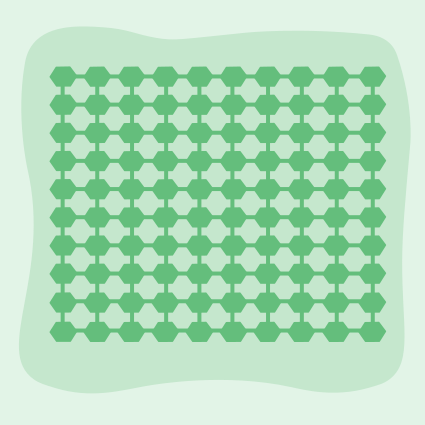
Insoluble fiber stays firm and doesn't soak up water. It moves straight through your gut and helps you poop.

How to use

A few ideas to get started.

High-contrast cards

Prop a card up during tummy time, about 20–30 cm from your baby's face. Hold the card steady and let your baby focus on the bold shapes. Try placing one at eye level wherever your baby spends time, and rotate cards every few days to keep things fresh.

Matching game

Start with just 3 or 4 pairs, face up. Ask your child to find the two that look the same. As they get the hang of it, add more pairs. Older toddlers can try turning them face down for a memory game.