Packs About Newsletter
Pack 3 · Cell Division

Mitosis

How one cell becomes two. Eight stages of cell division, illustrated step by step.

Free

All Lupe packs are free. Science should be for everyone.

What's inside

High-contrast cards

8 black-and-white cards for newborns (0–6 months).

Preview Download
Matching game

8 pairs of colour cards for toddlers (1–3 years).

Preview Download
Colouring sheets

8 full-page illustrations to colour in.

Preview Download

Free for personal use and classroom or childcare use. Please don't resell or redistribute commercially. If you're a teacher or childminder, you're warmly welcome to print and use these with your kids.

Print specs

  • A4 portrait PDF, print at 100% scale
  • Works on any home printer · copy shops for card stock
  • Crop marks included for easy cutting
The stages

One cell becomes two.

Every cell in your body was made by a cell that divided. Here are the eight stages of how that happens.

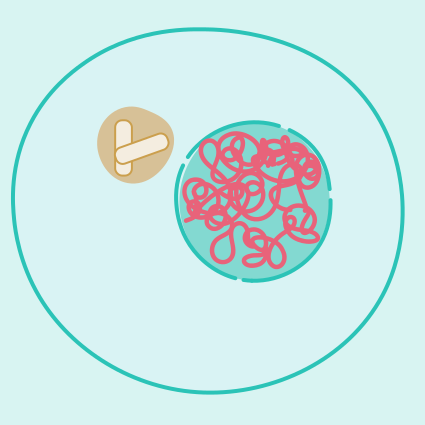
Interphase

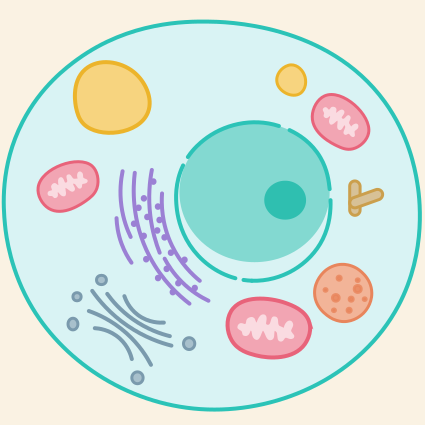
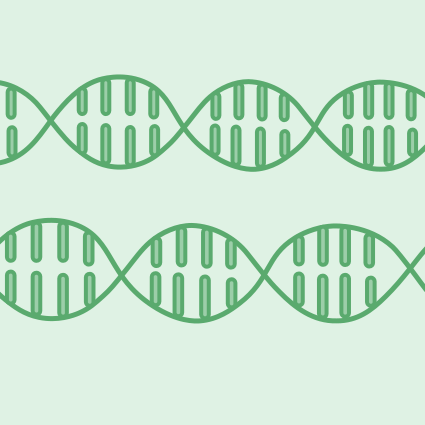
To prepare for division, the cell grows bigger and copies its DNA. DNA contains the genes that make us unique, long strands packed inside the nucleus, shaped like spaghetti. When copying is done, the cell has two complete sets. Enough for two cells.

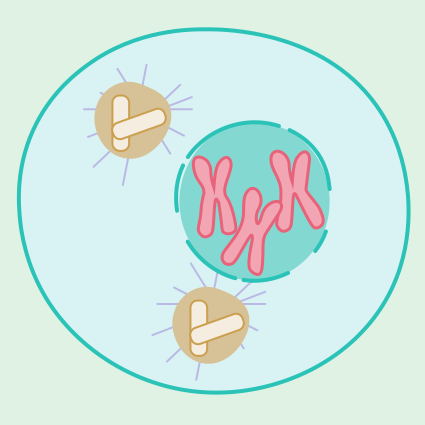
Prophase

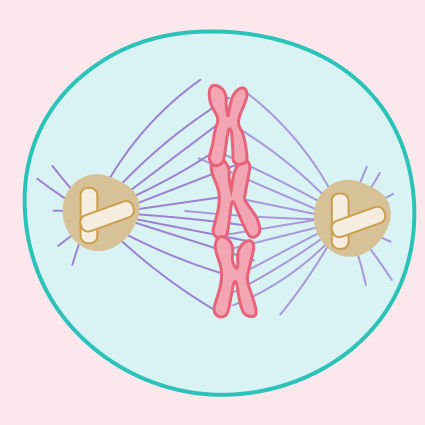
The long strands of DNA bunch up into tight, X-shaped bundles called chromosomes. The centrioles, small structures that help the cell divide, move to opposite sides of the cell and start building the spindle between them.

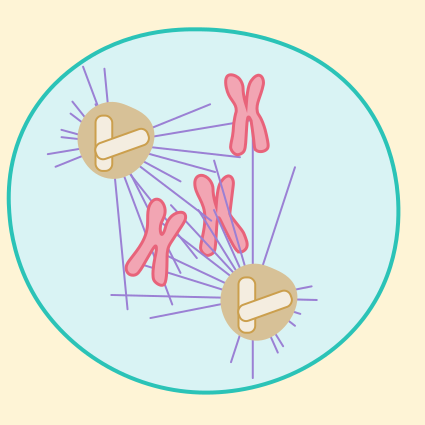
Prometaphase

The nucleus breaks open, and now the spindle fibres can reach in and attach to the chromosomes, ready to pull them into position.

Metaphase

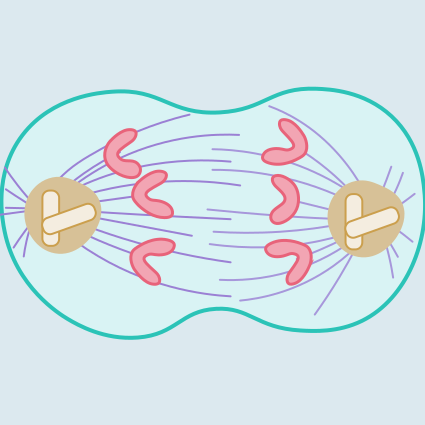
The spindle fibres pull the chromosomes until they all line up in a row across the middle of the cell. Each chromosome is held from both sides.

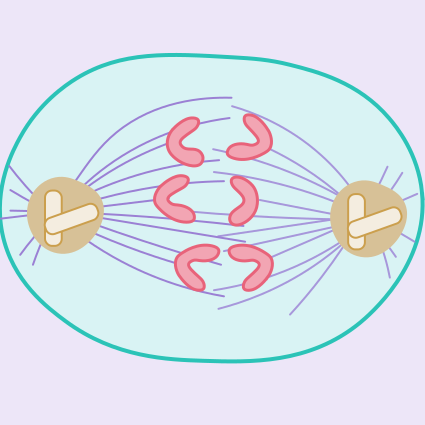
Anaphase

The spindle fibres pull each chromosome apart into two copies. One copy moves to one side of the cell, the other moves to the opposite side.

Telophase

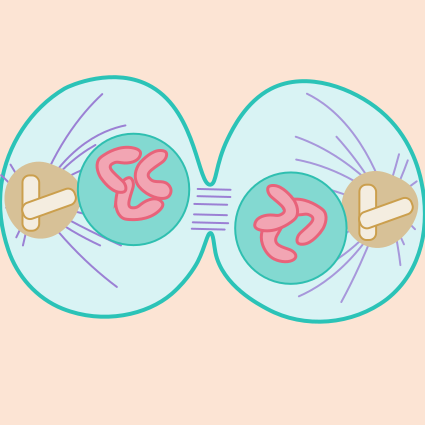
The chromosomes have now travelled all the way to each end, and a new nucleus forms around each set.

Cytokinesis

The cell now has two nuclei, one at each end. It splits into two by squeezing tighter and tighter in the middle, until the two new cells separate.

Daughter cells

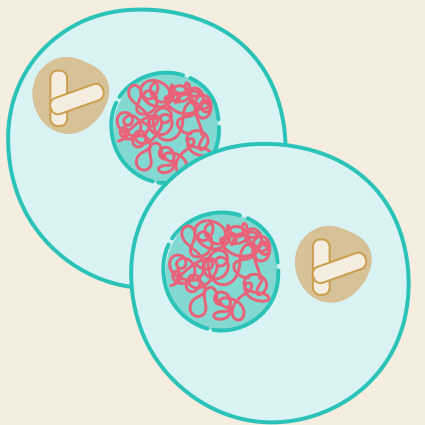
The two new cells are called daughter cells. Each one has a complete copy of all the DNA it needs to grow, and the whole process can start again.

How to use

A few ideas to get started.

High-contrast cards

Prop a card up during tummy time, about 20–30 cm from your baby's face. Hold the card steady and let your baby focus on the bold shapes. Try placing one at eye level wherever your baby spends time, and rotate cards every few days to keep things fresh.

Matching game

Start with just 3 or 4 pairs, face up. Ask your child to find the two that look the same. As they get the hang of it, add more pairs. Older toddlers can try turning them face down for a memory game.