Packs Activities Blog About Newsletter
Pack 6 · Digestion

The Digestive Tract

Follow your food on the longest journey it will ever take. Eight stops through the digestive system, from your first bite to the cells that absorb the nutrients.

Free
Start here
Parent's cheat sheet

A 1-page guide to the eight stops on the digestive journey, so you can talk through it with your child.

For the curious
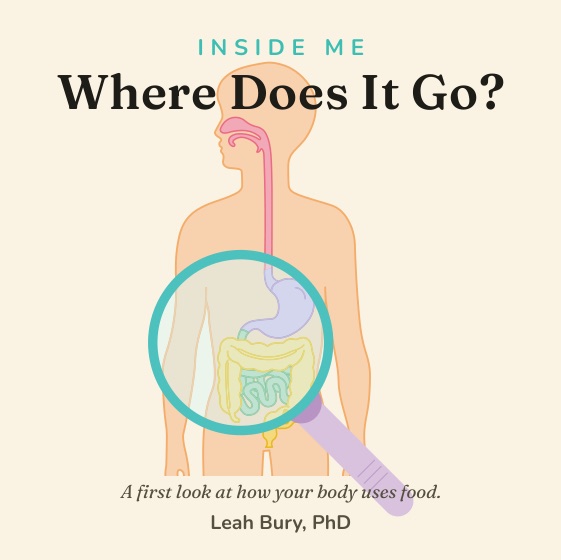
Where does it go?

What's inside

0–6 months
High-contrast cards

8 black-and-white cards for the earliest months.

1–3 years
Matching game

8 pairs of color cards.

1–3 years
Coloring sheets

8 full-page illustrations to color in.

Ages 2+
Cut & place

Cut out the organs and place them where they belong. Easy and challenge versions.

Ages 2–4
Body strip puzzle

Cut the body into strips and reassemble it. Easy (4 strips) and full (8 strips) versions, plus a labeled reference page.

Print specs
  • Prints from any home printer at A4 portrait, 100% scale
  • Card stock or lamination makes them last
License

Free for personal use and classroom or childcare use. Please don't resell or redistribute commercially. If you're a teacher or childcare provider, you're warmly welcome to print and use these with your kids.

The journey

From bite to bloodstream.

Every time you eat, your food travels through a system of organs that break it down, pull out what your body needs, and pass along the rest. Here are eight stops on that journey.

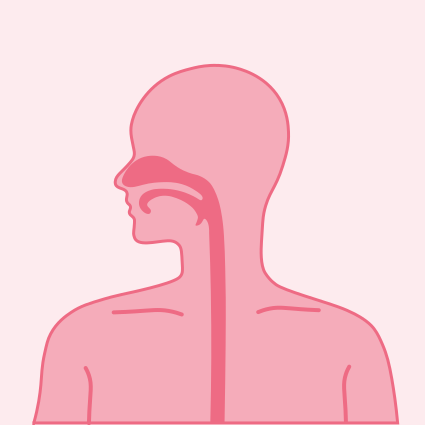
Mouth

Digestion starts the moment you take a bite. Your teeth break food into smaller pieces while saliva starts breaking down the starches. By the time you swallow, digestion is already underway.

Oesophagus

The oesophagus is a muscular tube that connects your mouth to your stomach. It squeezes food downward in waves, so it works even if you're upside down.

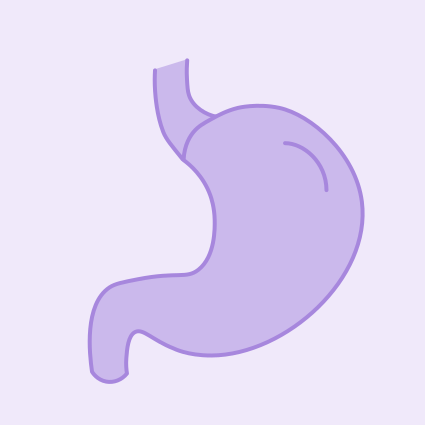
Stomach

The stomach is a stretchy, muscular bag that churns your food and mixes it with strong acid. It breaks everything down into a thick paste before sending it on.

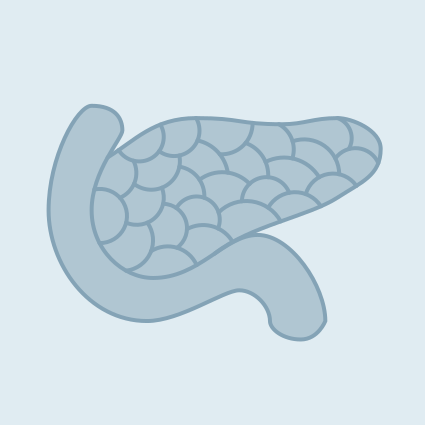
Pancreas

The pancreas makes enzymes that help break food down even further, and it controls how much sugar stays in your blood. It works quietly behind the scenes, but nothing runs without it.

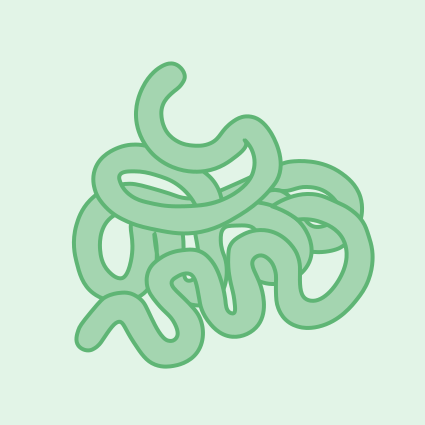
Small intestine

The small intestine is the first stretch right after the stomach. This is where enzymes from the pancreas and bile from the liver mix in and the real work of digestion happens.

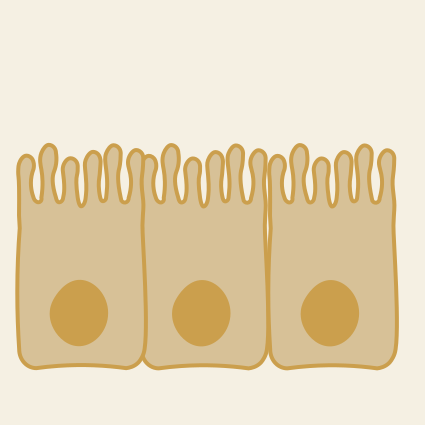
Villi

The inside of your small intestine is covered in millions of tiny, finger-like bumps called villi. They give the intestine a huge surface area so it can absorb as many nutrients as possible into the blood.

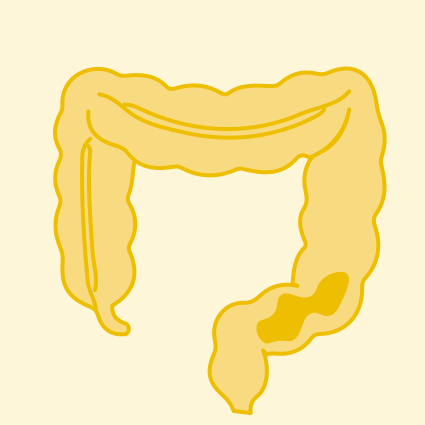
Large intestine

By the time food reaches the large intestine, most of the nutrients have been absorbed. What's left is water and waste. The large intestine pulls out the water your body can still use.

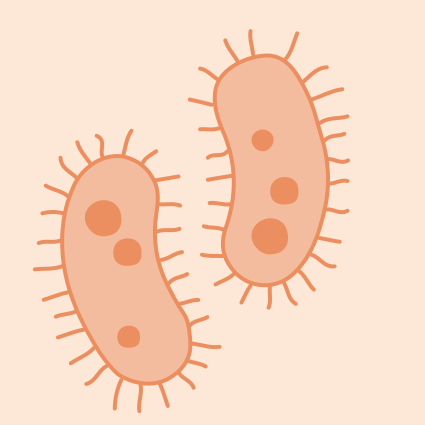
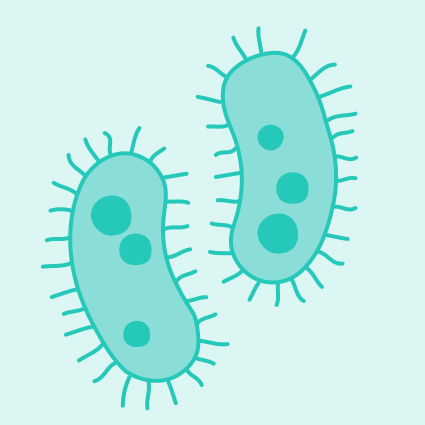
Bacteria

Your gut is home to trillions of bacteria, and most of them are helpful. They break down fiber, make vitamins, and help keep your immune system strong. You couldn't digest properly without them.

How to use

A few ideas to get started.

High-contrast cards

Prop a card up during tummy time, about 20–30 cm from your baby's face. Hold the card steady and let your baby focus on the bold shapes. Try placing one at eye level wherever your baby spends time, and rotate cards every few days to keep things fresh.

Matching game

Start with just 3 or 4 pairs, face up. Ask your child to find the two that look the same. As they get the hang of it, add more pairs. Older toddlers can try turning them face down for a memory game.

Cut & place

Cut out the organs and let your child place them where they belong. Start with the easy version, where shaded guides show where each piece goes, then move to the challenge version without the guides. Laminate the pages and use Velcro dots or Blu Tack so they can do it again and again.