Packs Books Activities Blog About Newsletter
Pack 9 · How You Grew

How You Grew

How one cell becomes a person. Eight stages of embryo development, from the egg and sperm to a newborn baby.

Free
Start here
Parent's cheat sheet

A 1-page guide to the eight stages between the first cell and a baby, so you have the words when your child asks.

For the curious
How a body begins
What's inside

0–6 months
High-contrast cards

8 black-and-white cards for the earliest months.

18 months+
Matching game

8 pairs of color cards, one for each stage.

Ages 1+
Coloring sheets

8 full-page illustrations to color in.

Ages 2+
Sequence how you grew

Eight circular cards and two playboards. Put the stages in order, from one cell to a baby. Color-matched slots to start with, plain slots when they're ready.

Print specs
  • Prints from any home printer at A4 portrait, 100% scale
  • Card stock or lamination makes them last
License

Free for personal, classroom, and childcare use. Please don't resell, redistribute, or re-host these files, and please keep the Lupe credit on them. To share, link people to lupe.science rather than uploading the PDF elsewhere. Full terms & licensing.

How a body begins

One cell becomes a person.

Every person starts as one cell. Here are the eight stages between that first cell and a baby.

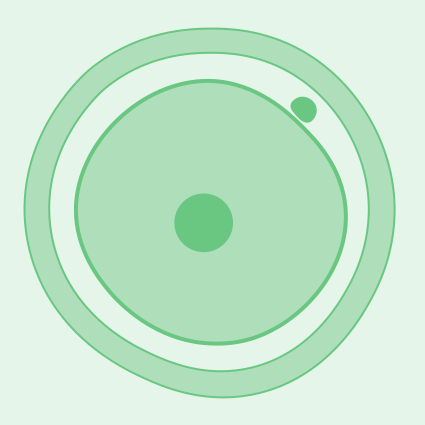
Egg cell

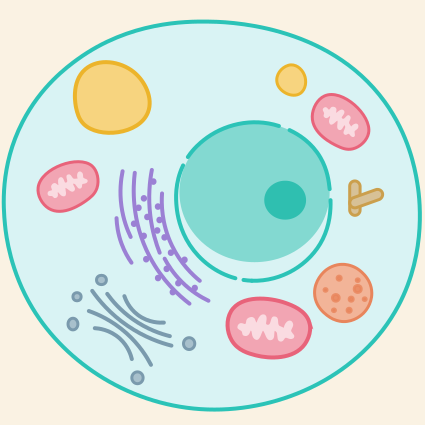
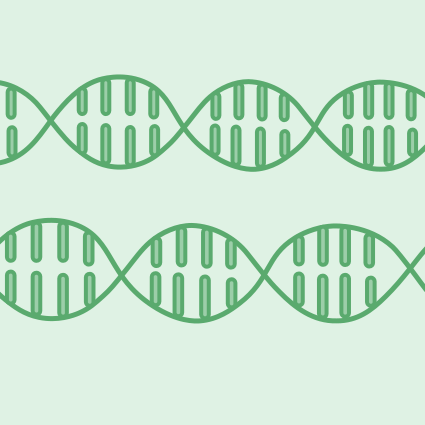
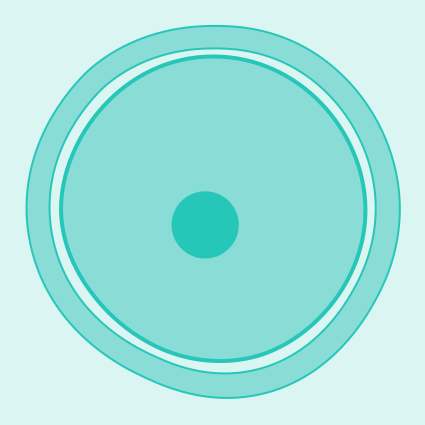
The egg cell is one of the largest in the body, just big enough to see without a microscope. It waits in the ovary, and carries half the DNA needed to make a person.

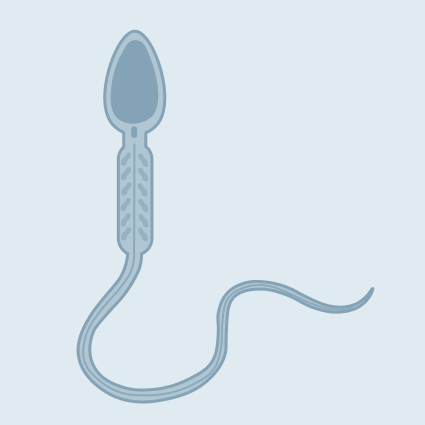
Sperm cell

The sperm cell is one of the smallest in the body, and carries the other half. Its long tail whips from side to side, which is how it swims toward the egg.

Zygote

The zygote is the one cell made when the egg and sperm join. Their two halves make one complete set of DNA, and every cell in your body came from this cell.

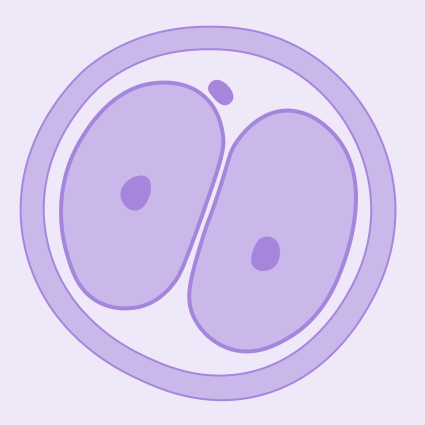
Two cells

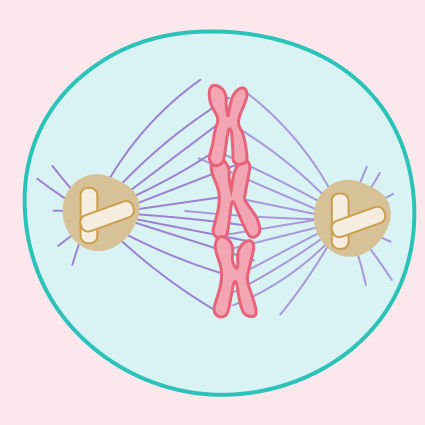
The first division happens about a day in. One cell becomes two, two become four, and four become eight, each one a copy of the first.

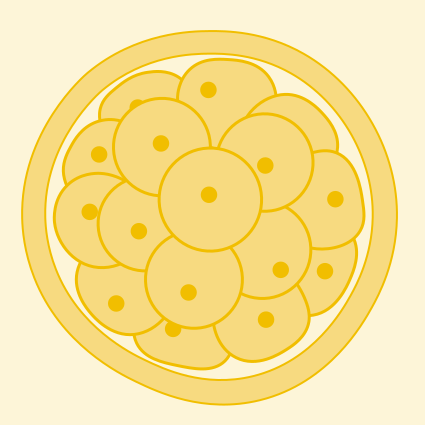
Morula

The morula is a bunch of about sixteen cells, about four days after the start. Morula is Latin for mulberry, which is what it looks like.

Blastocyst

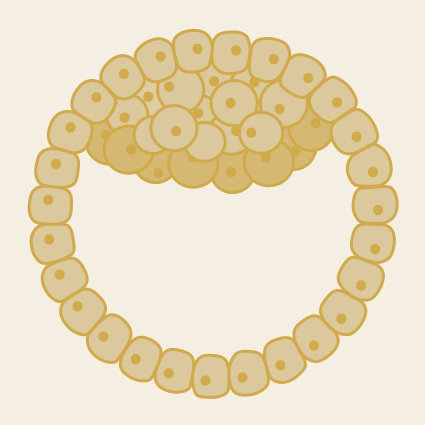
The blastocyst is a hollow ball. The cells on the outside become the placenta, and the small group inside becomes the baby.

Embryo

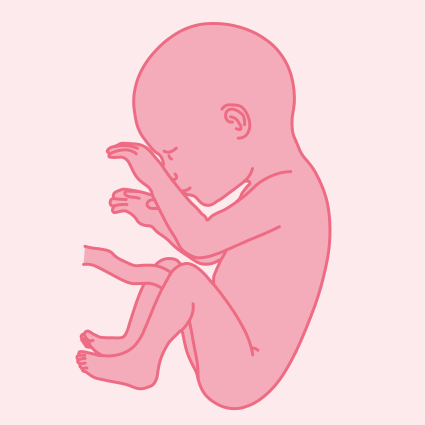
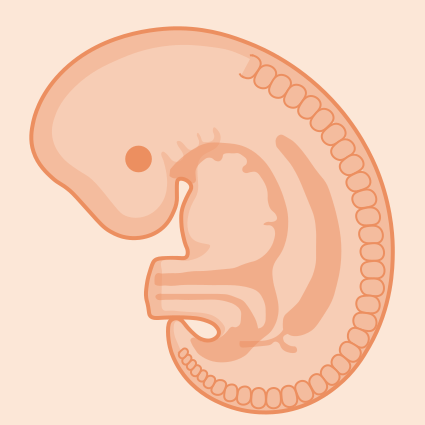
The embryo is a curled shape with a beating heart by six weeks, and small buds where the arms and legs will be.

Baby

After nine months, a baby is fully formed. Every cell has the same DNA, and each kind of cell uses a different part.

How to use

A few ideas to get started.

High-contrast cards

Prop a card up during tummy time, about 20–30 cm from your baby's face. Hold the card steady and let your baby focus on the bold shapes. Try placing one at eye level wherever your baby spends time, and rotate cards every few days to keep things fresh.

Matching game

Start with just 3 or 4 pairs, face up. Ask your child to find the two that look the same. As they get the hang of it, add more pairs. Older toddlers can try turning them face down for a memory game.

The books

There are books, too.

See all the books

Five picture books about the world inside the body, from the parts of a single cell to what happens to a meal once a child has eaten it.