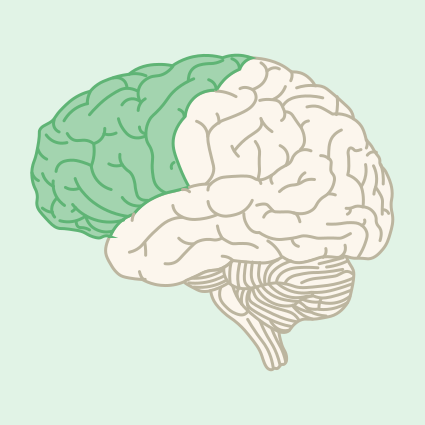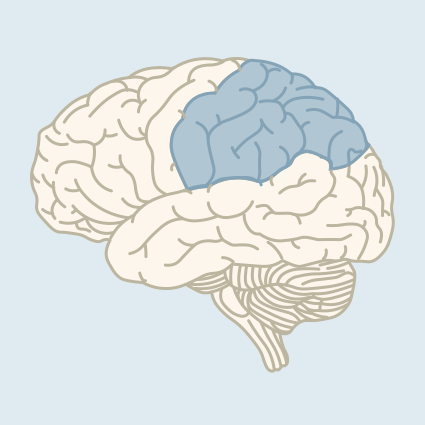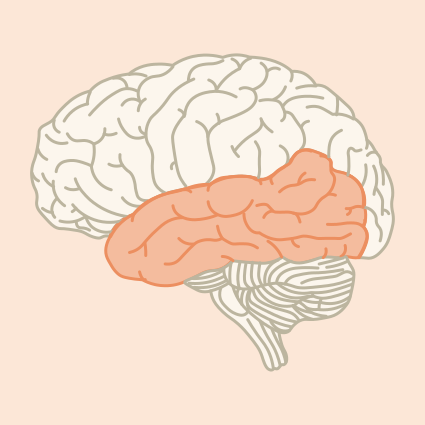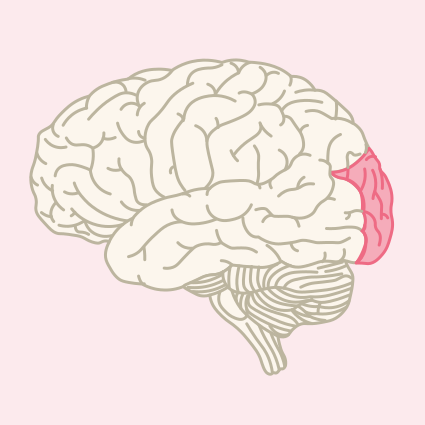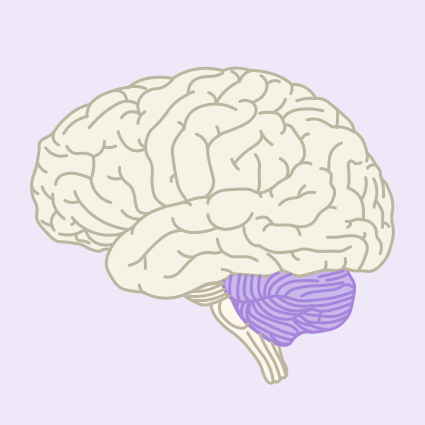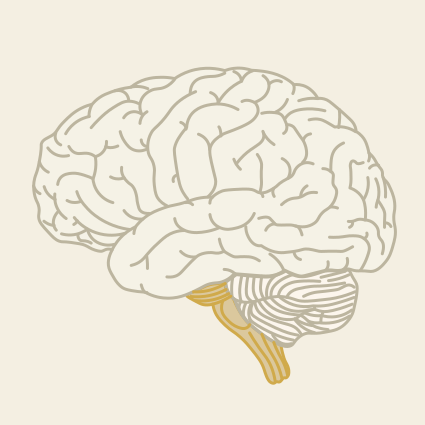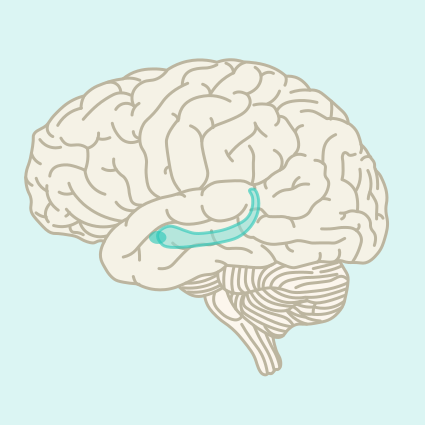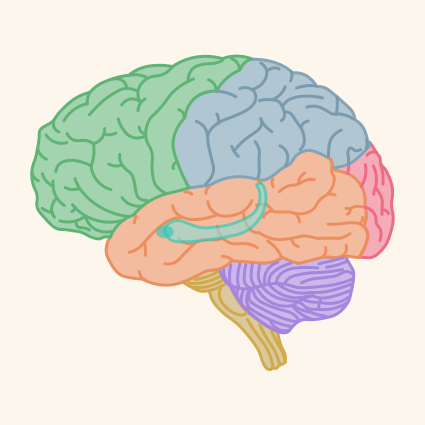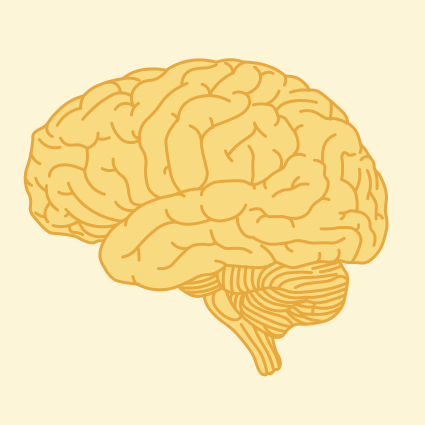
8 pairs of brain cards that show where each part of the brain is, ending with the whole brain in color.
Free for personal, classroom, and childcare use. Please don't resell, redistribute, or re-host these files, and please keep the Lupe credit on them. To share, link people to lupe.science rather than uploading the PDF elsewhere. Full terms & licensing.
Your brain is full of neurons, and with their branches and long trunks, they look a lot like trees. Other cells live in the forest too, each with a unique job. Some wrap the trunks, some keep the forest safe, and some keep it growing.
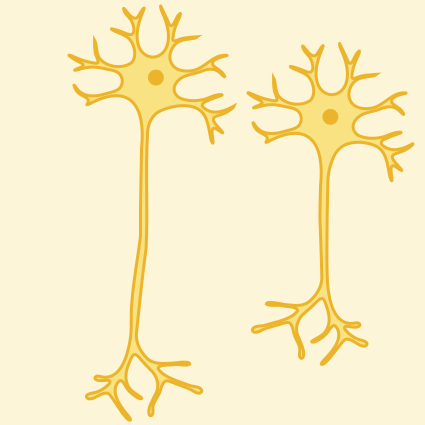
A neuron is shaped a bit like a tree. Messages come in through its branches and travel down its long trunk, called the axon, to the next cell.
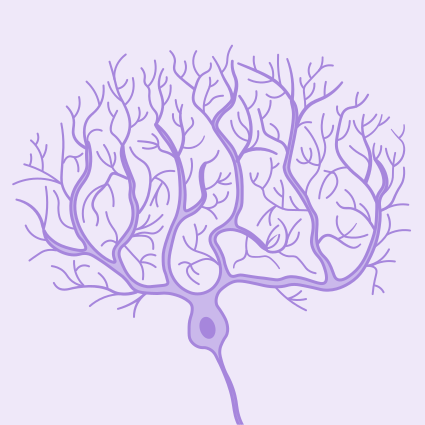
The Purkinje cell lives in the cerebellum, a part at the back of your brain that helps you balance. Its branches spread into a fan as thin as a leaf.
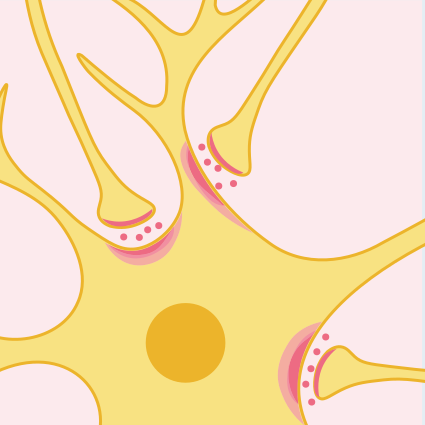
A synapse is a tiny space where one neuron can send a message to another cell. The message crosses the gap, like passing a note to a friend.
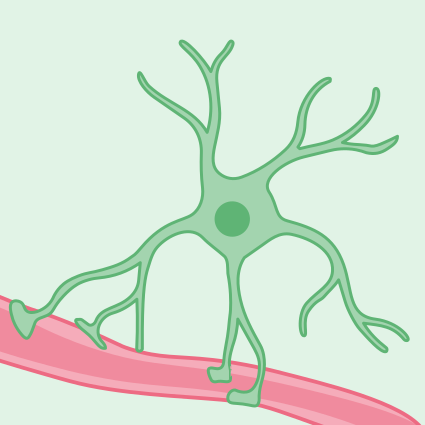
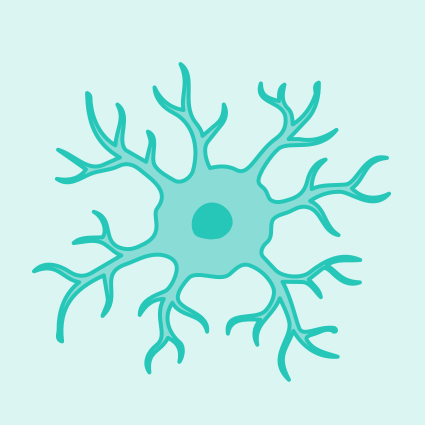
Astrocytes are shaped like stars. Their arms reach out to blood vessels and to neurons, and help bring the neurons energy.
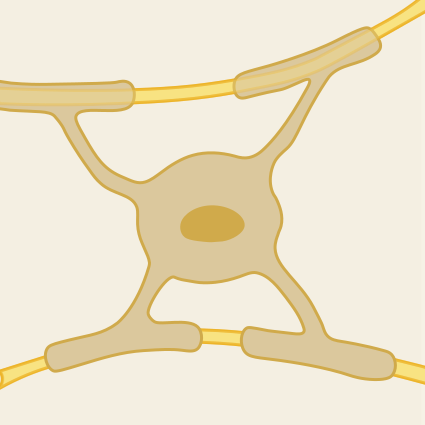
An oligodendrocyte wraps around parts of the neurons' long trunks, called axons, like a scarf. This wrapping helps messages travel much faster.
Microglia keep the brain safe. Their thin branches are always moving, feeling around for germs and damaged cells, and when they find some, they swallow them up.
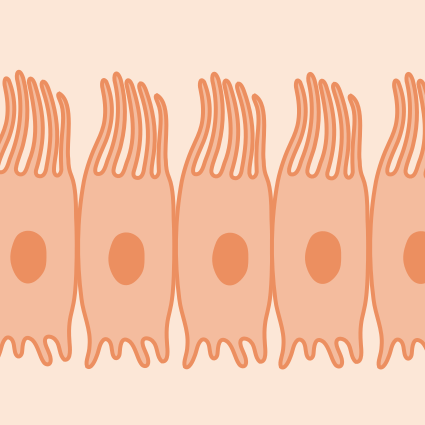
Your brain has spaces filled with a clear liquid that helps cushion it. Ependymal cells line these spaces, and their tiny hairs wave back and forth to help move the liquid around.
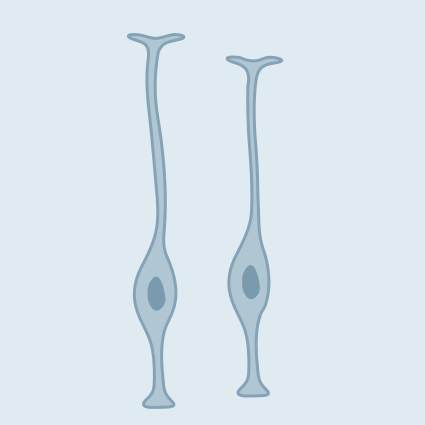
A neural stem cell can make new brain cells, including neurons and glia. These cells are especially busy while a baby's brain is growing.
Your brain has different parts, and each one is involved in different things, like seeing, moving and remembering. The brain map cards show where each part is, and the last card puts the whole brain together in color.
Prop a card up during tummy time, about 20–30 cm from your baby's face. Hold the card steady and let your baby focus on the bold shapes. Try placing one at eye level wherever your baby spends time, and rotate cards every few days to keep things fresh.
Start with just 3 or 4 pairs, face up. Ask your child to find the two that look the same. As they get the hang of it, add more pairs. Older toddlers can try turning them face down for a memory game.
Every Lupe pack is free, forever. We'll only email you when new packs land.