Free for personal use and classroom or childcare use. Please don't resell or redistribute commercially. If you're a teacher or childcare provider, you're warmly welcome to print and use these with your kids.
Your body has its own defense system. Some parts patrol, some attack, some remember. Together they keep you well, and they learn from every fight.
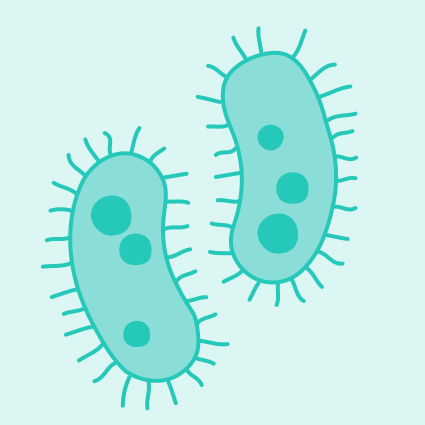
Bacteria are alive, but much smaller than your cells. Some live in your body and help you, others can make you sick if they get inside.
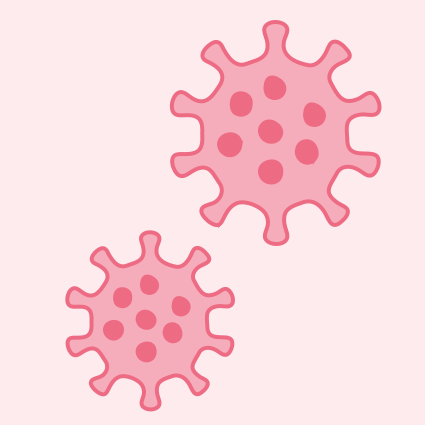
A virus is even smaller than bacteria. It sneaks into one of your cells and turns it into a factory for new viruses. That is how you catch a cold or the flu.
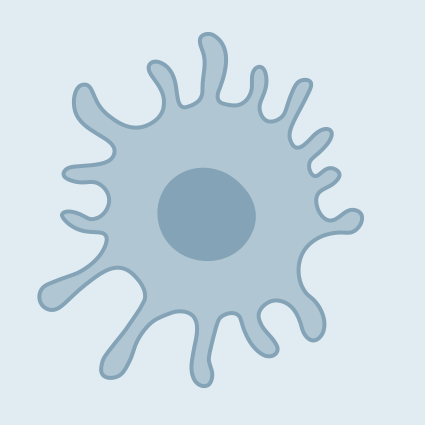
Dendritic cells go around your body picking up pieces of any invader they find, then bring those pieces to other immune cells so the team knows what to fight.
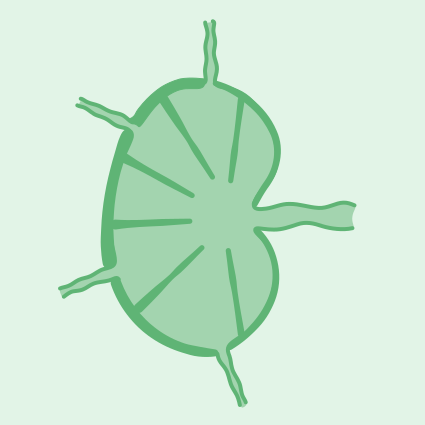
Lymph nodes are tiny meeting spots tucked all around your body, in your neck, your armpits, and lots of other places. Immune cells gather there to plan their response.
T cells find cells in your body that have been infected by a virus, and clear them out so the infection cannot spread.
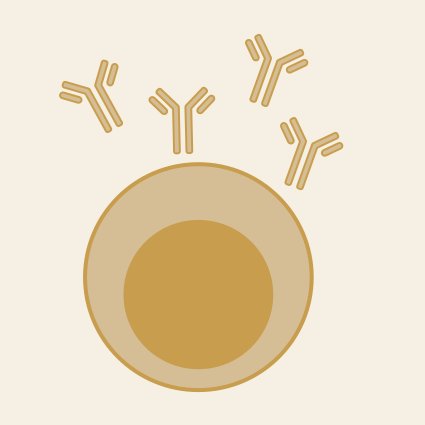
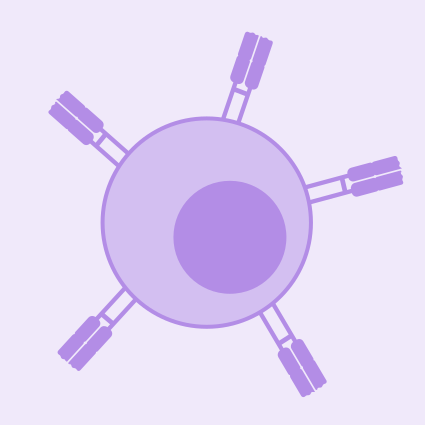
B cells make antibodies, the tiny proteins that grab onto invaders. Some B cells stay in your body long after a fight, remembering what to do next time.
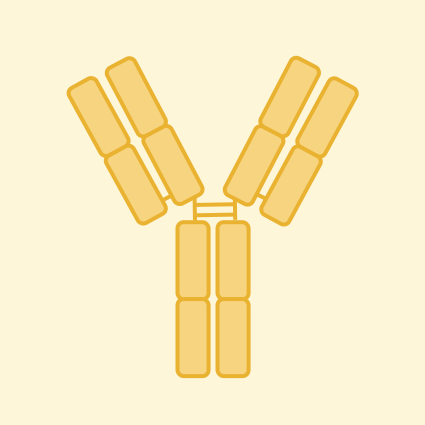
Antibodies are tiny proteins that lock onto invaders and hold them tight. Each antibody is shaped to grab just one specific invader, like a key in a lock.
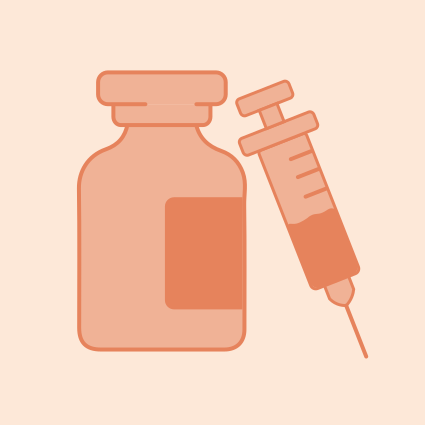
A vaccine introduces your body to an invader in a safe way. Your B cells learn it and prepare antibodies, ready in case you meet the real one later.
Prop a card up during tummy time, about 20–30 cm from your baby's face. Hold the card steady and let your baby focus on the bold shapes. Try placing one at eye level wherever your baby spends time, and rotate cards every few days to keep things fresh.
Start with just 3 or 4 pairs, face up. Ask your child to find the two that look the same. As they get the hang of it, add more pairs. Older toddlers can try turning them face down for a memory game.